
Guide
Clearing a section before building: what to expect.
Bought a section that’s gone to grass, gorse or scrub? Clearing it is usually the first job on site. Here’s how clearing a section before building fits into the build, and what to sort out before the machine turns up.
On this page
Why section clearing comes first
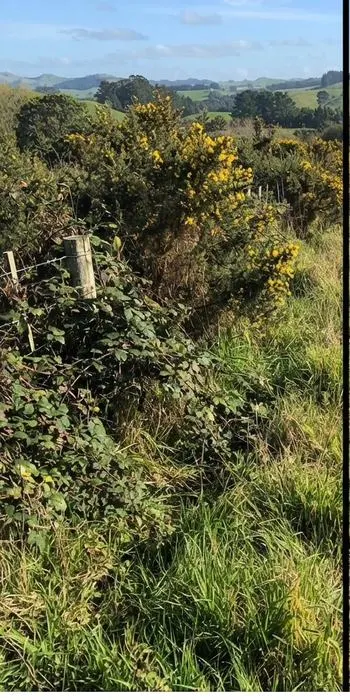
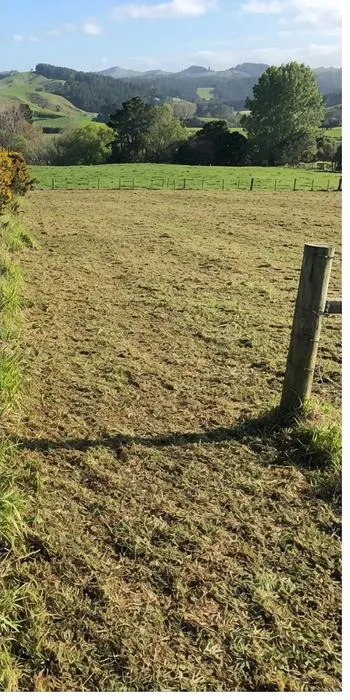
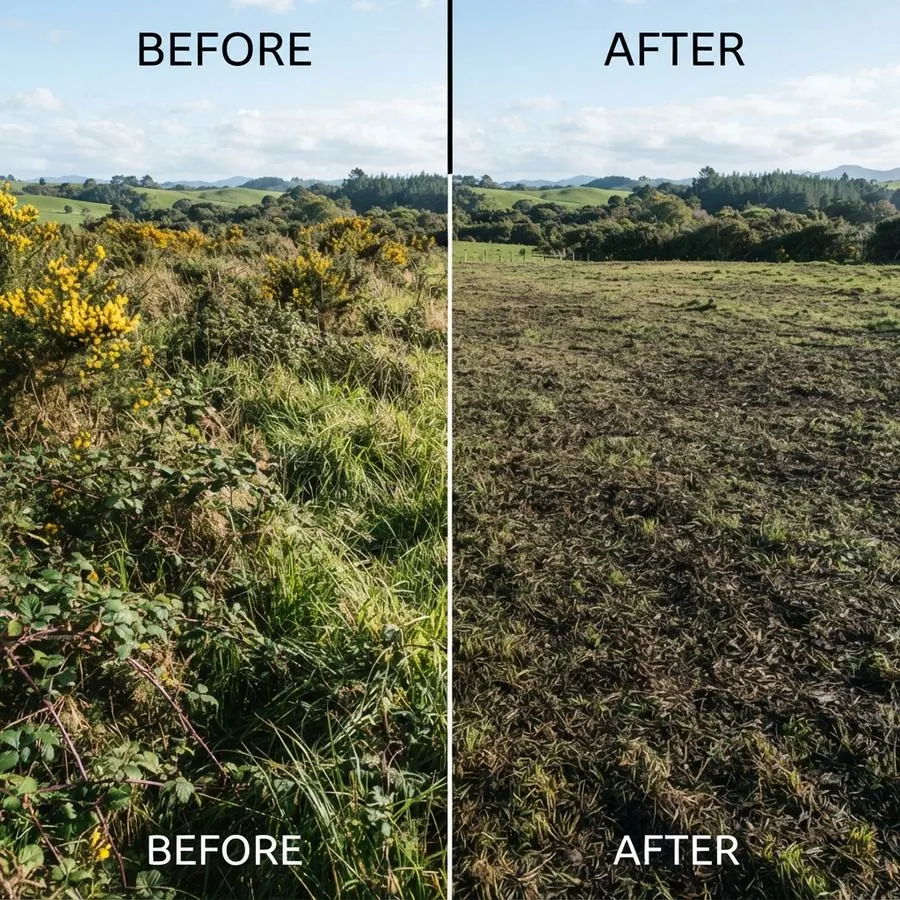
Surveyors, engineers, designers and builders all need to see and walk the ground. An overgrown section hides contours, soft spots, boundary pegs and rubbish, and makes even a site visit hard work. Site clearing early gives everyone a clear view of what they’re working with.
Before
After
Vacant section, before and after clearing
What mulching does, and doesn’t, do
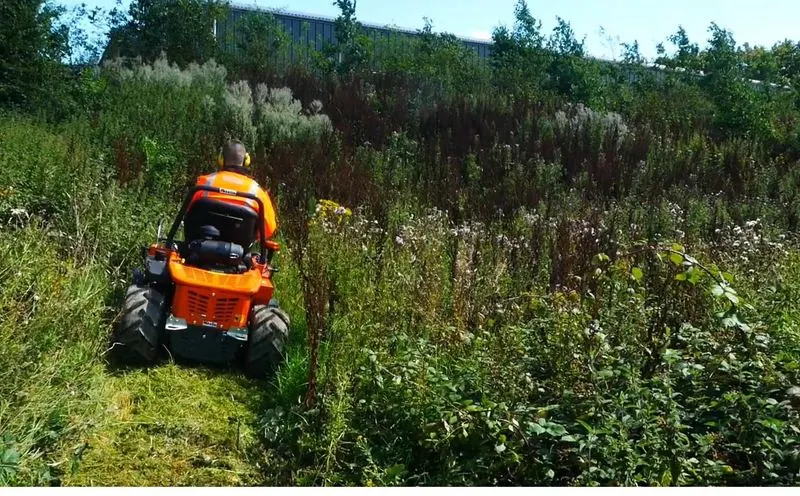
Flail mulching cuts the vegetation down and turns it into mulch that stays on site as ground cover. There’s no cart-away and no burn pile.
It doesn’t remove stumps, roots or topsoil. If your build needs earthworks, a digger will still do that part. Mulching gets the overgrowth out of the way so that work can be planned and priced properly.
Before we arrive
- Before work begins, let us know about any hidden hazards, access restrictions or trees and vegetation you want protected.
- Remove or flag hazards: old wire, waratahs, rubbish, rocks and building materials.
- Check the machine can get on: gate width, a clear entry point, and your neighbour’s permission if access crosses their land.
- Tell us about soft or wet ground, drains, septic tanks or underground services.
- Send us photos and a rough size, so we bring the right machine for the job. Our guide to what affects the cost of land clearing explains how the price is worked out.
Clearing a section before building: consents and neighbours
Clearing long grass, gorse and scrub off a section usually doesn’t need any paperwork, but some vegetation can. Depending on your district plan, removing protected trees or native bush may need resource consent. The government’s resource consent guide explains how to check, and your council can confirm the rules for your site before we start.
It’s also worth giving your neighbours a heads-up. Flail mulching is noisy while the machine is working, and a quick word beforehand goes a long way, especially if access runs along a shared boundary.
How it fits the build timeline
- Clear the section so it can be walked, surveyed and assessed.
- Survey, geotech and design work, with a clear view of the ground.
- Earthworks and site preparation by your builder or earthmoving contractor.
- If there’s a delay before the build starts, a maintenance mow stops it getting away again.
How long does section clearing take?
The time required depends on the size of the section, vegetation density, terrain and machinery access, and we’ll give you a realistic idea of timing when we quote. Clearing a section before building is also easier to schedule if you book it before your surveyor or designer needs to be on site.
Overgrown Mowing provides mechanical vegetation clearing for suitable overgrown residential sections and building sites. See our section clearing service, or send us a few photos for a quote.
Common questions
Clearing a section before building, answered.
Do you take the cleared vegetation away?
No. Everything is mulched and left on site as ground cover rather than carted off.
Do you remove stumps and roots?
No. Flail mulching cuts and mulches the growth at ground level. Stump and root removal is earthworks, which your builder or an earthmoving contractor will handle.
Is the mulch a problem for building?
It breaks down over time, and any that’s in the way of the build is dealt with during earthworks along with the topsoil.
Do I need resource consent to clear my section?
Usually not for grass, gorse and scrub, but it depends on your district plan, particularly for protected trees or native bush. If you’re unsure, check with your council before we start.