
Pricing
How much does land clearing cost? What affects the price.
Land clearing cost comes down to a handful of factors. Every overgrown block is different, so we quote per job rather than off a flat rate. Here’s what actually drives the price, and what you can do to keep it down.
On this page
The big factors
Six things that shape your quote.
Two sections the same size can take very different amounts of time to clear. What’s growing, how steep it is and how the machine gets in all matter as much as the area itself.
That’s why we ask for a few photos and a rough idea of size before we quote. It lets us match the right machine to the job and give you a straight number on your land clearing cost, not a guess.
Vegetation
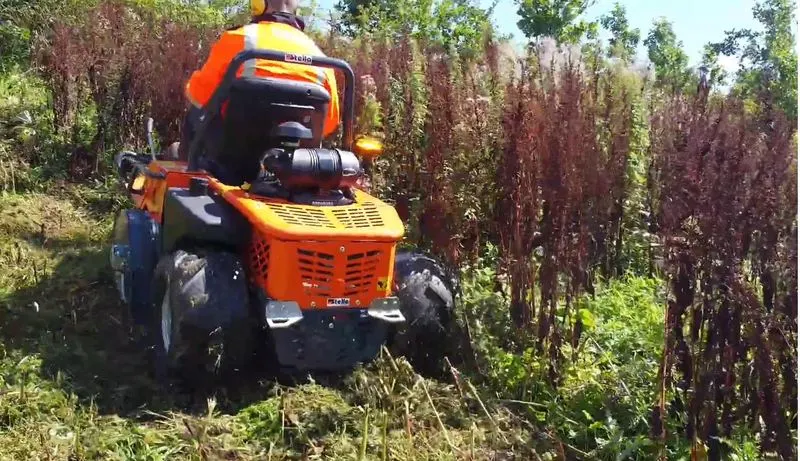
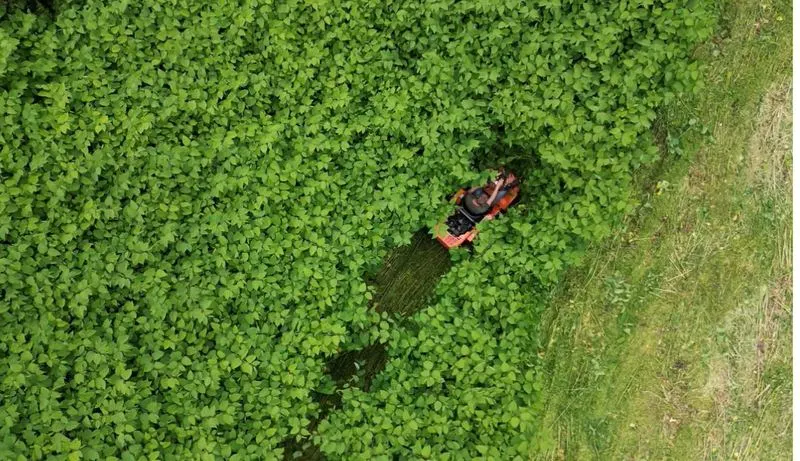
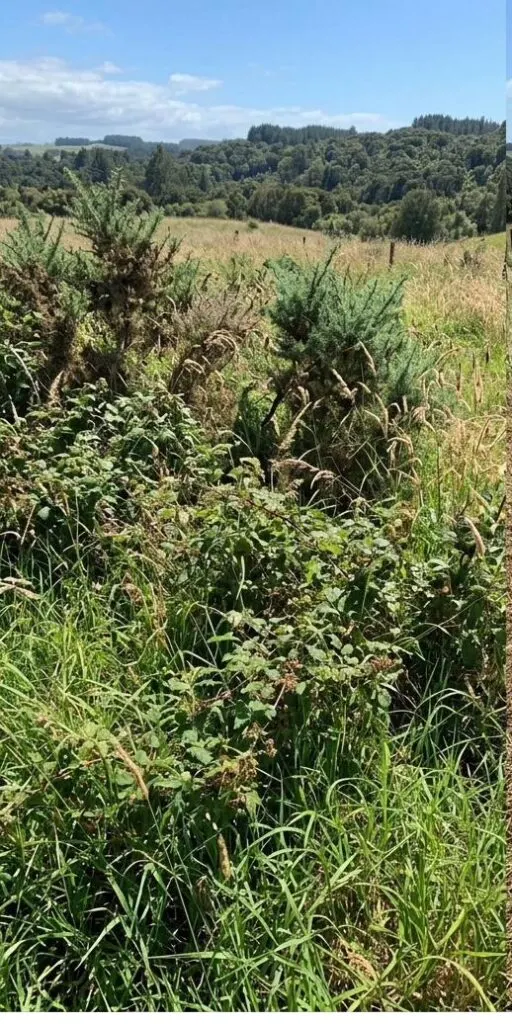
Long grass and kikuyu mulch faster than dense gorse, blackberry or woody scrub. The thicker and older the growth, the longer it takes.
Area
Bigger areas take longer, but they’re usually more efficient per square metre once the machine is on site.
Slope and terrain
Flat paddocks are quickest. Steep banks, gullies and hill faces may need remote-controlled tracked mowing equipment and a slower pace.
Access
Gate widths, tracks, ground firmness and how far the machine has to travel across the property all affect time on site. Very soft or boggy ground is not suitable for our machinery.
Hidden hazards
Old wire, waratahs, stumps, rocks and rubbish slow the job down and can damage machinery.
Location and frequency
Where the property is, and whether it’s a one-off clear or regular visits through the growing season.
Same size, different job
Why two properties of the same size can cost different amounts.
Two properties can have exactly the same area but need very different amounts of work. One might be a flat, firm paddock of long grass with straightforward machinery access. Another of the same size might have steep terrain, dense gorse and blackberry, and restricted access.
The second property can take considerably more operating time, even though the area is identical. That’s why we look at vegetation density, slope, ground conditions, machinery access and travel when preparing a quote, rather than applying a single rate per hectare.
Travel is part of that picture. We work across Auckland, Northland, Waikato and Bay of Plenty, and each regional page explains the areas we cover.
How quoting works
A straight answer, not a guess.
01
Send us photos
Your location, a few photos of the growth, and roughly how big the area is.
02
We assess it
We look at the vegetation, slope and access, and work out which machine suits the job.
03
You get a quote
Your land clearing cost, confirmed before any work starts.
Ways to keep your land clearing cost down.
Most of these cost you nothing but a bit of time before we arrive, and they can make a real difference to your land clearing cost.
- Send clear photos and a rough size up front, so the right machine turns up the first time.
- Flag or remove hazards like old wire, waratahs, stumps, rocks and rubbish before we arrive.
- Make sure gates and tracks are open and the machine can get onto the site easily.
- Tackle growth before it gets old and thick. Knocking it back regularly usually costs less than a big clear every few years.
- Group nearby areas on the same property into one visit rather than booking them separately.
- Let the mulch stay on site. There are no green-waste loads, tip fees or burn piles to pay for.
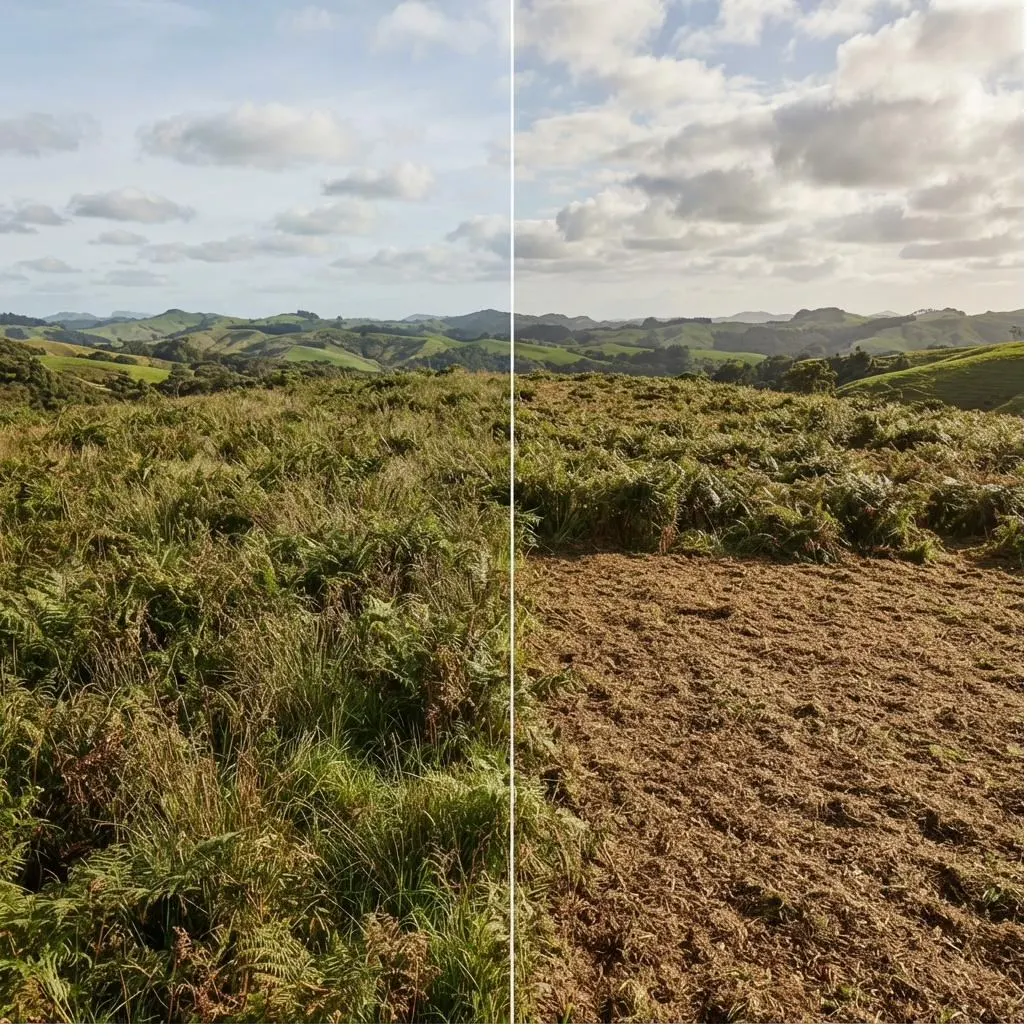
Before
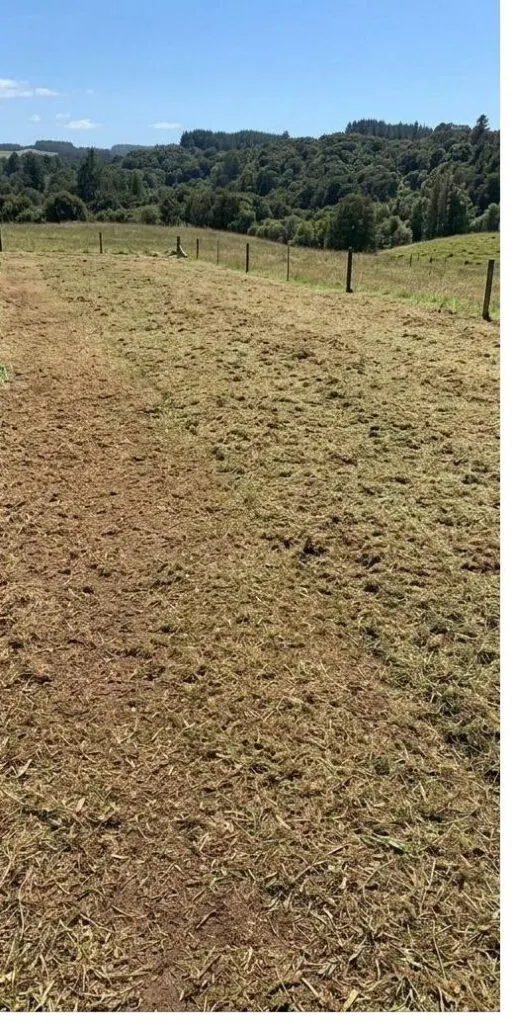
After
Hillside gorse belt, before and after clearing
Want to know what’s involved for your type of job? See gorse and blackberry removal, land clearing, section clearing, slope mowing or lifestyle block mowing.
Common questions
Land clearing costs, answered.
Can you give me a land clearing price per acre or hectare?
We can provide a quote once we understand the size and conditions of your property. Area is only one factor affecting the price: vegetation density, slope, ground firmness, machinery access and travel distance can all influence the time required, so we don’t use a flat per-acre or per-hectare rate. Photographs and an approximate area are a useful starting point, and we’ll let you know if we need to see the site before confirming a price.
Is the quote free?
Yes. Send us your location and a few photos and we’ll come back to you with a quote at no cost.
Does mulching save on disposal costs?
Yes. Everything is mulched and left on site as ground cover, so there are no green-waste loads, tip fees or burn piles to manage. Burning off often needs a fire permit too, so check what applies in your area if you were planning on it.
Is regular maintenance cheaper than a one-off clear?
Usually, over time. Land that’s knocked back before it re-establishes is quicker to mow than ground that’s been left for years, which is why some customers book regular visits through the growing season.
Want a price for your land?
Send us your location and a few photos of the vegetation, terrain and access, and we’ll give you a straight answer.